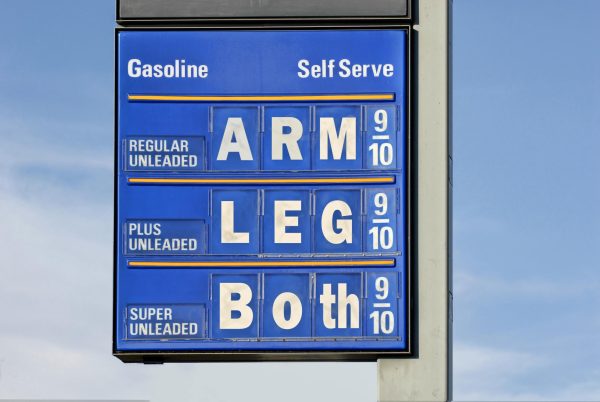
HUDSON一If you’ve driven past a gas station lately, you’ve probably done a double-take at the sign out front. What used to be a usual stop in a weekly routine has turned into something that makes you think twice about whether the drive is worth it.
For a lot of Hudson High School students, it isn’t anymore.
“I’ve stopped, like, driving around a lot because I just can’t, like, afford it as much,” said HHS sophomore Mason Gross. “It’s just not worth it anymore.”
And the numbers back him up.
Where Things Stand?
Gas in Massachusetts is now averaging $4.23 per gallon for regular grade. A year ago, it was sitting just under $3. That’s more than a 40% jump in 12 months. For anyone filling a 12-gallon tank, that’s roughly $15 more every single time you pull up to the pump.
For Gross, it adds up fast. “It’s, like, 60 bucks to fill my tank,” he said. “And I have a small tank.”
It’s not just a problem in Massachusetts either. The national average hit $4.39 per gallon at the end of April — more than $1.10 higher than a year ago. Every single state in the country saw double-digit price increases between April 2025 and April 2026. There’s nowhere to hide from it.
Why Is This Happening?
In late February, the U.S. and Israel began joint military operations in Iran. Since then, the average price of a gallon of gas has climbed nearly 50%, about $1.50 more per gallon compared to before the conflict started. The Strait of Hormuz, one of the world’s most critical oil shipping routes, has been effectively closed. Crude oil prices spiked to $126 a barrel as a result. When crude goes up, gas goes up. Simple as that.
When asked about the future and prices coming down, HHS Secretary Michelle Shekleton said, “You can just hope,” adding that “it’s all gonna depend on what’s going on on the other side of the world.”
Shekleton said she’s been somewhat insulated from the worst of it. “My commute is very short, so it doesn’t impact me that much.” But she’s not pretending the situation is under control.
The Larger Impact
Even if you don’t drive, this affects you. AAA spokesperson Mark Schieldrop said it plainly — gas prices ripple through everything. Groceries, goods, the cost of pretty much anything that gets shipped or delivered. None of it is immune.
Since March 1, Americans have spent $21.7 billion more on gas than they did in the same timeframe last year, according to GasBuddy analyst Patrick De Haan. That number may seem unbelievable, but it is the real amount coming out of people’s wallets — including students, of which in Massachusetts, only 28.1% are employed, according to the Bureau of Labor Statistics. That’s money out of real people’s pockets, including students working part-time jobs just trying to get through the week.
“Per month, maybe $20-$30 more,” Gross said. “Depends on how much I’m driving, but it’s really been taking a lot out of my wallet.”
For HHS junior Jordan Sousa, the financial pressure has started bleeding into his personal life. “You know, it makes me want to drive way less,” Sousa said. “And I feel like I have less of a social life because of it.”
That’s a sentiment many students can relate to. When a tank of gas costs as much as a Friday night out, something has to give — and for many, it’s the drive itself.
Not Everyone Is Feeling It the Same Way
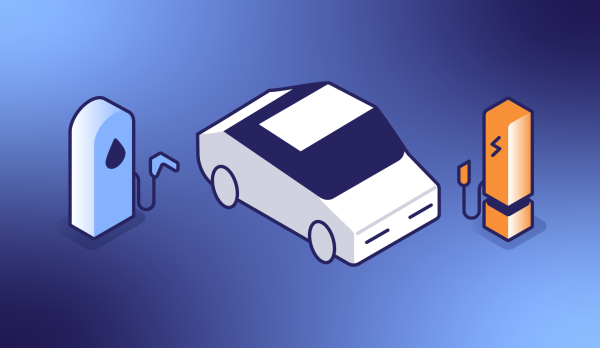
Not everyone at HHS is tightening its budget at the pump. For those with fuel-efficient or hybrid vehicles, the spike has been far more manageable.
“It has not impacted me all that much,” said HHS physics teacher Christian Langlois. “I have a hybrid car, and I don’t have to drive all that far to and from school, so I get gas, honestly, like, once a month. And I do not even pay attention to what it costs.”
HHS Spanish teacher John Ruiz echoed a similar experience. “It does affect me like everybody else, but I do drive a hybrid vehicle, so it doesn’t have a huge impact on me.”
It’s a reminder that how hard these prices hit largely depends on what you’re driving — and how far you’re going.
-30-