HUDSON— For an AP literary field trip, I attended The Umbrella Arts Center along with classmates Jordan Sousa, Wendryl Costa, and Emmanuel Rodriguez to see The Counter by Meghan Kennedy.
Walking into the show, I knew absolutely nothing about it. I didn’t even know anything about the theatre. I had no assumptions beyond the vague idea of it being in a small center with one simple theatre where the seats were far away from the stage, with actors performing to a disconnected crowd.
I expected it to be sort of run down, but in a good way — worn but loved. I expected the show to have low funding and mid-level acting.
Boy, was I surprised.
What I got instead was a fully immersive experience where I truly felt as if I were a part of the story. The show gripped the audience’s emotions and moved us unexpectedly in a way that was completely satisfying to me.
The Story
The show is set in a small-town diner with two main characters who take up the majority of the play, except for one scene. The waitress, Katie, serves her regular early morning customer, Paul.
They develop a routine. Paul is always the first one into the diner. As time progresses, they develop a casual relationship, always talking and catching up. This relationship remains purely surface-level, though.
As their bond deepens, Paul requests that he and Katie become true friends and open up to each other by sharing their secrets. Katie, who is a somewhat secretive character, reluctantly agrees, and they become closer as they open up.
Then one day, Paul makes a shocking request — a request that forces both characters to confront the pasts they have tried to hide.
He asks her to poison him on a random day at a random time and not to tell him when she does it. He hands her a vial of poison, instructing her to put it in his coffee whenever she feels like it.
Paul desires this fate because he needs surprise in his life. He thinks he has lost everything, and he needs something to shock him. He doesn’t want to die of old age in a home; he wants to go peacefully and on his own terms.
The request is deeply unsettling to Katie.
Katie has grown to care for Paul, and now she is left with a decision that confronts her values and scares her. Helping Paul hurts him, and refusing hurts him too. She is stuck in a deep moral struggle and does not know what to do.
Going Into the Show Blind
This might have seemed like a bad idea, but in reality, it enhanced the experience.
In real life, you never know what is going to happen next, and in many cases, you don’t even understand what is happening in the present moment. Since I did no research beforehand, I felt this same uncertainty at the start of the play, which made me much more engaged in the story, setting, and characters.
As I deciphered the storyline, it felt like a real-life experience that connected me more deeply with it.
The Personal Experience of a Small Theatre
One of the first things that stuck with me was the intimacy of the theatre.
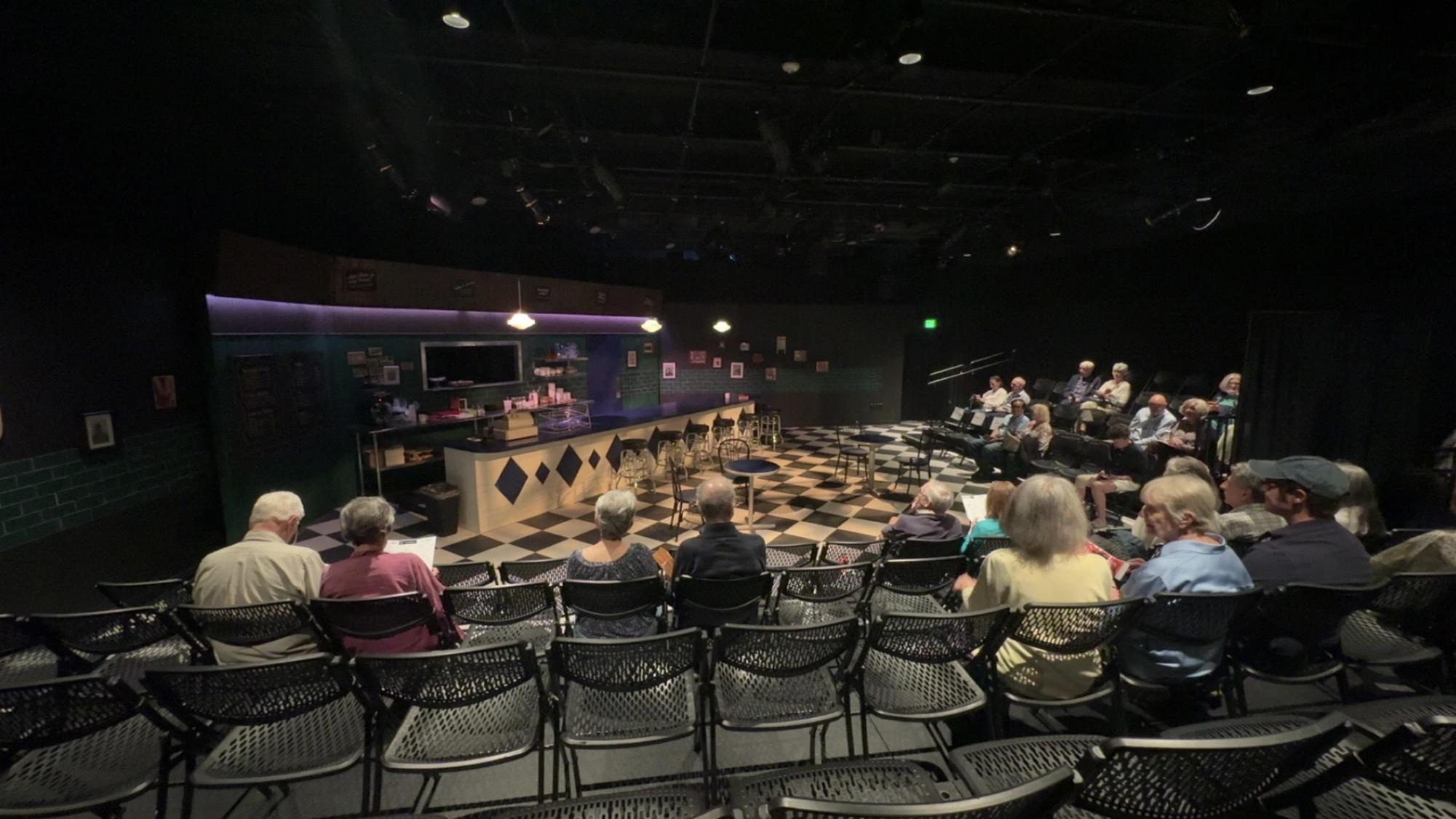
Like I said before, I was expecting a large theatre similar to the one at Hudson High, but in reality, the theatre was a small room with about 50 seats, and there wasn’t even a stage.
After buying your tickets, the seating arrangement was first come, first served. The front row of seats was actually on the set, just feet away from where the actors were performing.
We chose the back row because we wanted to observe the environment without being noticed. Even so, the close proximity to the stage created the feeling of actually being part of the play.
The production took place in a very detailed diner setting with what looked like real working equipment, real food, and real coffee. The entire place emulated a small-town diner.
It felt as if we were tucked away in a corner booth listening in on the characters’ conversations.
The feeling of the play was so personal that there were a few occasions where the actors broke the fourth wall by winking at the audience or looking toward viewers after making a joke.
The Actor Who Played Paul
The actor who played Paul left the biggest impression on me.
He didn’t use a microphone; his voice alone filled the entire room with more than just noise. You could feel the emotion in each word he spoke and every syllable he pronounced.
You could tell how much he loves acting just by the way he carried himself. Even in scenes of sorrow, he projected pure passion.
You could hear every tiny change in his tone and the magnitude of his silences. By the end of the play, it felt like you knew exactly what he was thinking.
The execution of Paul’s character played a major role in my enjoyment of the play, and I felt that he brought the audience with him through every step of the journey.
My Takeaway
Overall, the entire experience showed me that great storytelling doesn’t always require spectacle.
It can be done with just two characters having a conversation across one set in one tiny theatre.
The Counter reminded me that we have so many little interactions in our everyday lives that can grow into beautiful things if pursued. The entire story started with one cup of coffee, and a friendship was formed over small talk.
Whether you realize it or not, every word spoken and every moment shared can hold value. It just depends on whether you are willing to recognize it.